Kastorix
TTRPG Overview
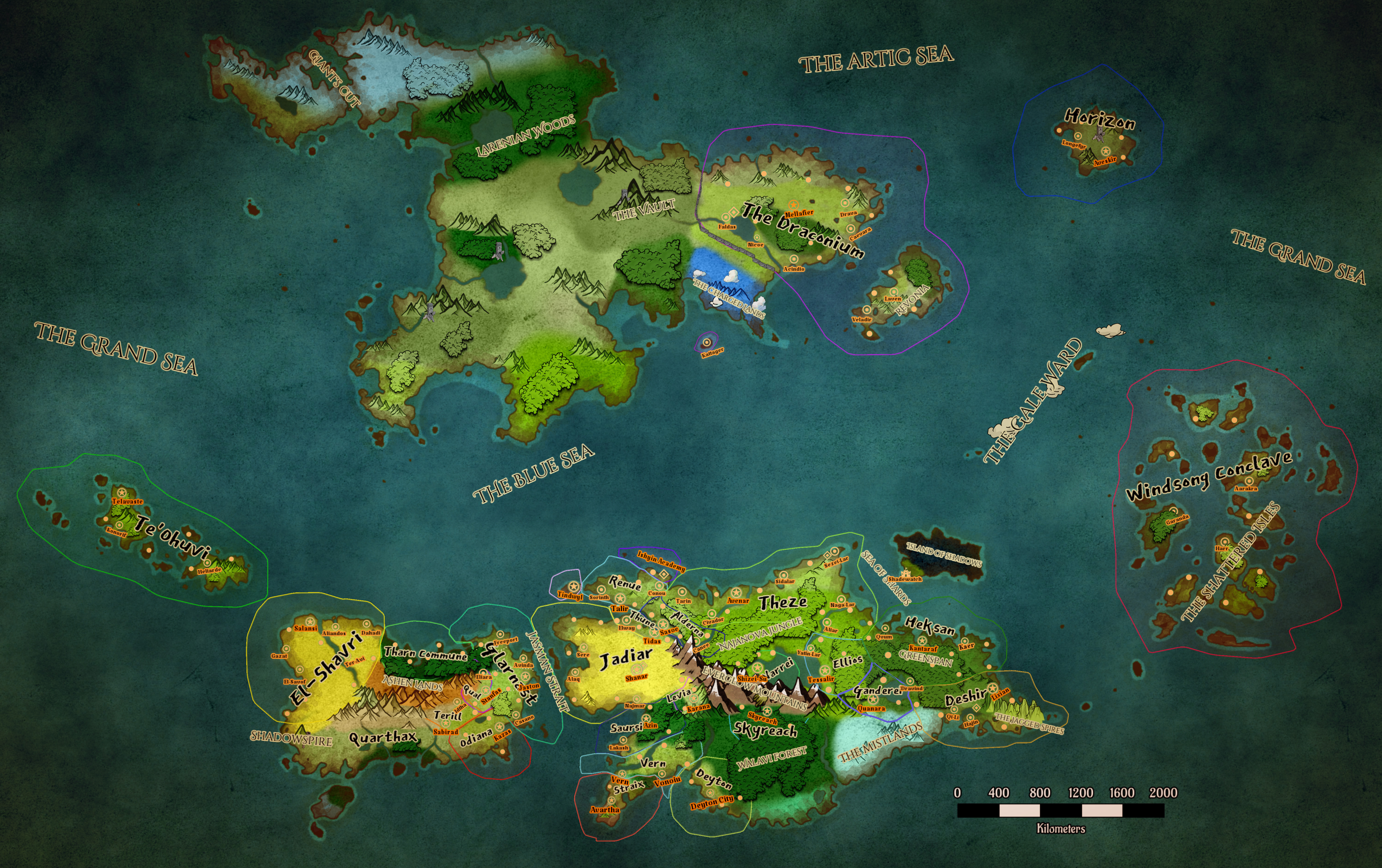
Kastorix is the name of both the TTRPG and the world it's set in. It's D20 based system heavily
inspired by
Pathfinder 2e.
In Kastorix magic is commonplace and mages are one of the main sources of power for nations.
There are no
classes, instead options come from feats and spells. In a sense, everyone is a mage, though
there is
considerable difference between different mages from the feats chosen. To start making a
character players
pick their species, then pick up feats and spells
The world and magic of Kastorix is inspired by magitech worlds like Eberron, Ravnica, Runeterra
and
Avishkar, as well as progression fantasy worlds and stories like Arcane Ascension, Mother of
Learning and
the Journals of Evander Tailor.
By design all powerful characters are magic users and rely on their auras instead of superhuman
durability,
though they need not be exactly traditional mages. There is room to build tinkering artificers,
heavily
armored magic knights and rogues with magical tricks
Actions
 Single Action
 Two-Action Activity
 Three-Action Activity
 Reaction
 Free Action
Creatures also have one reaction per round, usable on other players’ turns.
Some rare activities like casting powerful spells or rare rituals may cost more than 3 actions. To do these the creature needs to perform the activity over multiple turns without interruption.
Stats
Physique (PHY)
Dexterity (DEX)
Intelligence (INT)
Will (WIL)
I began by cutting out Strength as the difference between Strength and Constitution is flimsy anyway, and the TTRPG is mostly about mages. Physique is a stat for both Strength and Constitution, which has worked well so far. It increases your health, scales your Fortitude saving throws, adds to weapon attack and damage rolls and is useful for a few skills like Athletics and Brawling. Physique also determines which armor you can wear, and as armor provides a flat damage reduction, that's very useful for adventurers.
Dexterity has two main things going for it, Reflex saving throws and spellshaping rolls. Initiative rolls are also based on Dexterity. Reflex saving throws are extra important here since there is no armor class and every attack is a roll against them. If you are coming from DnD it’s important to note that while finesse weapons attack with Dex, the damage rolls still add Phy (like in Pathfinder). So if you want to be swinging weapons and doing damage, you can’t dump Phy.
When it comes to mental stats, I’ve also cut one out. Will serves as a mix of Wisdom and Charisma. The main benefit of Will is increasing your Mana and Aura every level. High Will characters can protect themselves with their aura and cast more spells using their larger mana pool. Characters with an Attunement can also cast their Attuned spells using their Will, allowing them to forgo int if they don’t value flexibility. Finally Wil is used in WIll saves, the rarest kind of saving throws used against things like fear and mind altering effects.
Intelligence is used in spellshaping modifiers (when not casting Attuned spells), and provides characters with extra spells and skills learned. Unlike the other stats Int doesn’t have an associated saving throw. But instead Int is also used in many feats that either scale on or are locked behind high Int, with powerful feats like Studied Ahead providing adept spells ahead on curve requiring 3 or more Int. Int is also the stat with most connected skills, having more than double that of Phy and Dex
Skills
- Acrobatics, DEX - Jumps, flips, gymnastics, walking on edges
- Arcana, INT - Theoretical knowledge of magic and magical creatures
- Athletics, PHY - Pushing, pulling, carrying, holding. Interacting with heavy things.
- Brawling, PHY - Grappling, shoving, tripping. Athletics against people
- Channelling, INT - Precise movement of mana, "unstructured magic", using spells in unorthodox ways
- Crafting, INT - Making things, artifice, technology
- Deception, WIL - Lying, omitting the truth
- History, INT - Knowledge of the past
- Insight, WIL - Reading people.
- Intimidation, PHY - Scaring people
- Medicine, INT - Recognizing diseases and treating them. Fixing wounds. Anatomy
- Mana Sensing, WIL - Sensing Mana, Auras and Magical Creatures and objects
- Nature, INT - Knowledge of plants and creatures
- Perception, INT - Seeing, detecting, not missing things
- Performance, DEX - Dancing, performing, singing
- Persuasion, WIL - Debating, haggling, passing on the blame
- Society, INT - Reading and making maps. Knowledge of current cultures and events
- Sleight of Hand, DEX - Stealing things, but also delicate touches
- Stealth, DEX - Hiding, sneaking
- Survival, WIL - Finding tracks, not getting lost, "Applied Nature"
My current game design principle has been to restrict Master level in a skill to feats level 4 or higher and Legendary level to feats level 10 or higher, with advantages and certain feats sometimes breaking those limits. Skill proficiencies are allowed to go to higher levels faster than other proficiencies since they aren’t used to directly attack and defend in combat.
Also taken from pathfinder is the idea of Lore skills. Lore skills are specific skills that aren’t in the main list. They are more narrow and specific than the core skills and therefore more potent. Lore skills can for example be a field of magic (Alchemy Lore, Souls Lore), Lore about a certain nation, place or creature (Draconium Lore, Jungle Lore, Hydra Lore) or specific profession (Legal Lore, Academic Lore, Farming Lore). Making a check with a lore skill will be easier than using a broader skill and perhaps come with extra info, but by design be rarer. Lore skills are Int based by default, but you might make an Alchemy Lore (DEX) check to carefully mix ingredients in a potion or use Mining Lore (PHY) to dig out a secure tunnel.
Character building/Progression
There are up to 20 levels, divided in the five ranks of magic users. Apprentice, Adept, Magus, Grand Magus and Archmage. Each level provides a small increase in mana (and therefore aura), as well as two feats and some other benefits.
- Arcane Feats come from your practice and learning of magic. You can pick one new arcane feat each level.
- General Feat come from your combat and general life experience. You can pick one new combat feat each level.
- Advantages are powerful feats that shape your character. You can pick one new advantage every fourth level.
- Ancestry Feats come from your species and its biology and cultural traditions. You can pick one new ancestry feat every fifth level.
Every three levels players also get to increase one of their core stats by 1. This can't be used
to increase the same stat twice in a row.
Arcane feats are generally the main way of learning new spells, but spells can also be learned
during downtime. Additionally when a character reaches a new mage rank they also learn spells of
that
rank equaling to their INT.
Level One
At level one players pick their species, which provides their base mana and health, some stat increases and a few special abilities. They then pick their base stats from the standard array (3, 1, 0, -1), setting their four core stats to a combination that fits their character.
- Pick a Background, which provides some skill proficiencies and a few special abilities
- Pick an Advantage, which provides a special ability
- Pick two Arcane Feats
- Pick one General Feat
- Pick one Ancestry Feat
They then increase their mana by their WIL and their health by their PHY.
They become proficient in a number of skills based on their INT.
Finally they learn extra spells based on their INT, losing spells if their int is negative.
Mana

Mana exists in all living things and is necessary for life. Creatures absorb mana from their surroundings, into their Mana Wells. Larger and more magical creatures generally have larger Mana Wells. Magical creatures use mana to fuel their magical abilities, like a dragon's breath or a coatls flight. Mages are simply those who use the mana in their Mana Wells to cast spells. As mana is used, the Mana Well depletes, and must be refilled by absorbing more mana. Doing this will over time grow the Mana Well, allowing more mana to be stored. However if a Mana Wells runs out of mana, the creature will quickly die.
Make a Mana Recovery Check (d20 + WIL) versus the DC based on the environment.
On a success you recover the specified amount of mana.
On a critical success you recover double the specified amount of mana.
On a critical failure you suffer one level of mana poisoning.
You may spend two actions on this action to have +2 bonus on the roll and recover twice the amount.
There are no spell slots in Kastorix, Mana is the resource used to cast all spells. Casting
spells costs mana depending on their rank and traits. Mages can cast spells beyond their
natural mana limit, but doing so risks mana poisoning and possibly death.
The rate of mana regeneration is based on the Mana Density of the location, but can be
increased by certain feats and actions. Mages can generally recover all their mana during a
long rest, but in low mana density areas this can take longer.
You can read more about mana here
Auras

Just as we breathe out carbon, mana not used by the soul is also expelled. This forms what's known as an aura, clinging to the creature like breath on a cold day. Auras are invisible to most, but mages can learn to see them, and some creatures can naturally see them. They provide a weak magical shield around the creature, protecting them from harm. As mana wells grow, so do auras, becoming stronger and more protective. Mages can also learn to manipulate their auras, shaping them and using them for magical effects.
Spend mana up to (your level + your Wil (min 1)) * 2, and restore aura health by that amount.
when you would partially block damage with your aura. Block the force of the attack with your Aura, making it take all of the damage. If it breaks your aura, you take the remaining damage.
All creatures have an Aura Health with a max equal to their Max Mana. Whenever they take damage, half of that is absorbed by their aura, which can be restored far easier than normal health. When the Aura Health reaches zero, the creature takes full damage until the Aura Health is restored. Vital damage bypasses auras, as do ingested and contact poisons (but not effects like poison clouds).
Mages can spend three actions to raise or lower their aura. While down it won't protect them, but it also can't be detected by mana sensing. They also have the Aura Block reaction and the reinforce aura action.
Spellcasting
Spells are the tools of mages, allowing them to manipulate the world around them. Spells are
learned through study and practice, and can be modified and changed by the mage. Spells are
cast by expending mana, shaping it into the desired effect. Spells can be cast quickly in
the heat of battle, or prepared ahead of time for more complex effects. Some spells are
simple and straightforward, while others are complex and require careful planning. Spells
are invented, refined, and recorded by spellcasters around the world, resulting in thousands
of spells and variants. Many spells have been independently invented by different cultures
and individuals across Kastorix.
Extends the duration of a spell that you are sustaining by 1 turn When you sustain a spell make a spellshaping roll as if you were casting the spell. You cannot fail the spell when sustaining it, but the DC changes to the new spellshaping result Some spells have effects that happen when you sustain such as moving the spell. You cannot sustain a spell more than once per turn, but you can sustain multiple spells in the same turn using multiple sustain actions
Make a spellshaping check (Int + Dex + Proficiency) compared to the difficulty of the spell. On a success the spell is cast and the result of spellshaping check is used for the DC of any saving throws imposed by the spell
Spells have a vocal and somatic component, which adds INT and DEX to the spellcasting check respectively. Attempting to cast a spell while silenced or restrained means casting without that component. Attuned creatures can use their WIL instead of INT when casting spells of their attuned aspect as they channeling it innately instead of using their knowledge of magic
Many spells can be sustained to maintain them. This is done via the Sustain action. Spells can be modified with metamagics, which changes the spellshaping DC and adds extra effects to spell. By default you can only use one metamagic per spell, but feats and abilities may allow you to use more. You can read more about spellcasting here
Focus Points
Focus points are the main non-magical resource in Kastorix. Players gain a new one every four levels, and recover spent ones by simply taking a 10 minute rest. By default they can only be used to gain advantage on Death Saving Throws, but feats and advantages unlock new ways to spend them such as combat maneuvers and other abilities, as well as empowering other actions. Certain feats also provide new ways to recover or gain temporary focus points.
Opposed Rolls
Kastorix works based on opposed rolls, meaning for every action both combatants roll dice. So
there is no more "do I roll a dice? no its a spell so I roll against your saving throw". Every
spell cast requires a spellshaping check
Basic attacks also use opposed rolls. Instead of having an armor class, characters make Reflex
saves against attack rolls. Attacks hit if the attacker rolls higher than the defender. Armor
instead provides resistance to different types of damage, making it easier to survive hits and
allowing armored characters to shrug off weak attacks.
When making attacks or casting spells with the Targeting trait, attackers can choose to target a
specific part of the body. This can inflict special conditions, like blinding or slowing the
target, but makes the attack harder to hit.
Creatures gain a bonus to their Reflex saves based on the part of the body being targeted.
Attacks with a weapon or spell with the Precision trait reduce this bonus by 2.
On a critical success the penalty is doubled.Some creatures
have special body parts that can be targeted, like a dragon's wings or Losungi's venom fangs.
But there are some common weak points on most sapient creatures:
| Target | Reflex Bonus | Hit Effect |
|---|---|---|
| Head | +6 | The creature is dazed 2 |
| Arms | +3 | The creature has -3 penalty to attacks and actions with that arm until the end of their next turn |
| Legs | +3 | The creature has -2 tile move speed next turn |
| Eyes | +10 | The creature is blinded next turn |
| Armor Weak Point | Varies | The hit bypasses armor resistance |